
Root Canal Treatment in Vadakara: Cost, Procedure, Benefits & When You Need It
A persistent toothache may need more than just pain relief
Sensitivity to hot or cold foods, swelling around a tooth, or a darkened tooth can sometimes indicate a problem deep inside the tooth. In some cases, the tooth may have an infection or inflammation affecting the dental pulp, and root canal treatment in Vadakara may be recommended to save the natural tooth.
Root canal treatment, also known as root canal therapy or RCT, is a common dental procedure used to treat infection or inflammation inside a tooth. Modern techniques can make the procedure much more comfortable than many people expect.
What Is Root Canal Treatment?
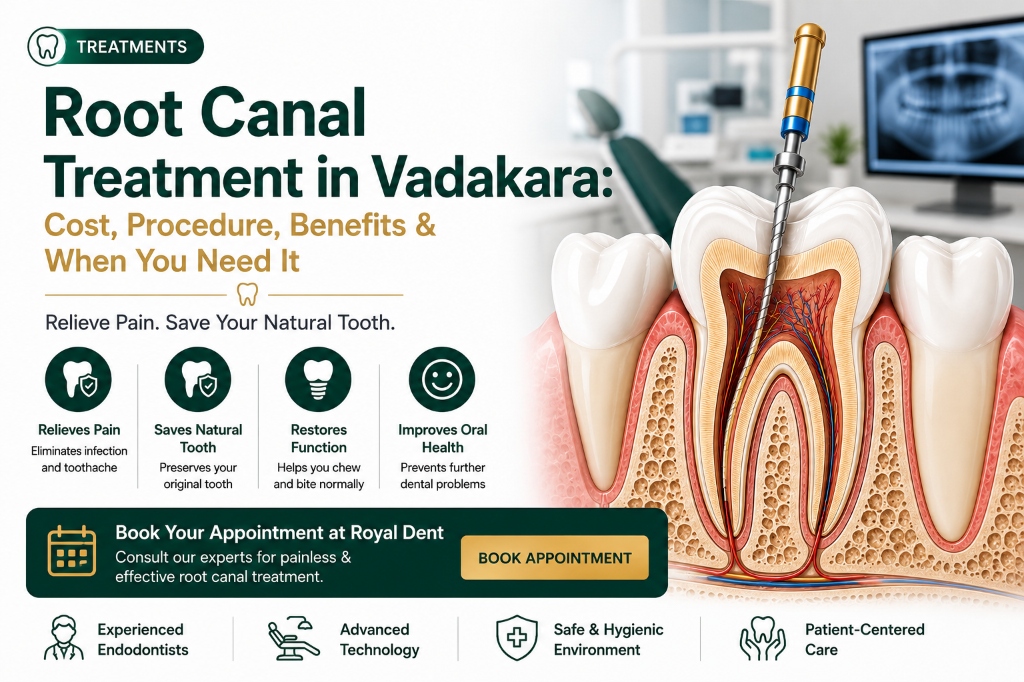
Root canal treatment is a dental procedure used to treat infection or inflammation inside the pulp of a tooth. The pulp contains nerves and blood vessels. If deep decay, cracks, trauma, or repeated dental procedures damage the pulp, bacteria can enter the inner part of the tooth and cause inflammation or infection.
During a root canal, the dentist carefully removes the affected pulp, cleans and disinfects the inside of the tooth, and seals the space. The tooth can then be restored, often with a dental filling or crown depending on how much tooth structure remains.
The main goal is to remove infection, relieve symptoms, and preserve the natural tooth whenever possible.
Signs You May Need a Root Canal
Not every toothache requires root canal treatment. However, certain symptoms can indicate that the pulp inside a tooth needs professional evaluation.
- Persistent or Severe Toothache: A toothache that continues or becomes increasingly uncomfortable can be a sign of a deeper dental problem. Pain may occur spontaneously or become worse while biting or chewing.
- Prolonged Sensitivity to Hot or Cold: Pain that continues for an extended period after exposure to hot or cold foods and drinks may require further evaluation.
- Pain When Biting or Chewing: Pain when pressure is placed on a particular tooth can sometimes indicate inflammation or infection affecting the tissues around the tooth.
- Swollen or Tender Gums: Swelling, tenderness, or a small pimple-like bump near a tooth can occur when an infection has developed around the tooth.
- Tooth Discoloration: A tooth that becomes noticeably darker or grayish may have experienced damage to its internal tissues and should be examined by a dentist.
- Deep Tooth Decay: When dental decay progresses deep into a tooth and reaches the pulp, root canal treatment may be necessary to treat the affected tissue and preserve the tooth.
- Cracked or Injured Tooth: A significant crack or dental injury can damage the pulp even when the tooth does not initially appear severely damaged.
If you are experiencing any of these symptoms, a dentist can examine the tooth and determine whether root canal treatment or another procedure is appropriate.
Root Canal Treatment Procedure: Step by Step
The exact root canal procedure varies depending on the tooth and the complexity of the infection. Treatment generally involves several important stages.
Step 1: Dental Examination
Your dentist examines the affected tooth and discusses your symptoms. Dental X-rays or other diagnostic imaging may be used to understand the condition of the tooth and surrounding structures.
Step 2: Local Anesthesia
The dentist uses local anesthesia to numb the affected area before treatment, helping make the procedure more comfortable for the patient.
Step 3: Accessing the Tooth
A small opening is made in the tooth to allow the dentist to access the internal pulp chamber and root canals.
Step 4: Removing the Affected Pulp
The damaged or infected pulp tissue is carefully removed from inside the tooth.
Step 5: Cleaning and Disinfecting the Root Canals
The root canals are cleaned, shaped, and disinfected to remove infected tissue and reduce bacterial contamination.
Step 6: Sealing the Tooth
Once the canals have been appropriately cleaned, they are filled and sealed to help prevent further infection.
Step 7: Restoring the Tooth
The tooth is then restored to protect it and return it to normal function. Depending on the amount of remaining tooth structure and the tooth's location, your dentist may recommend a dental crown after root canal treatment.
Does Root Canal Treatment Hurt?
Modern root canal treatment is performed with local anesthesia, and the procedure is intended to treat the source of dental pain rather than cause it. Some tenderness or sensitivity may occur after treatment as the surrounding tissues recover. Your dentist will provide specific aftercare instructions based on your procedure.
If you experience severe, persistent, or worsening symptoms after treatment, contact your dental clinic for professional advice.
Benefits of Root Canal Treatment
- Saves the Natural Tooth: Root canal treatment can allow a damaged or infected tooth to remain in your mouth instead of being extracted.
- Helps Relieve Dental Pain: When the source of infection or inflammation is treated, the symptoms associated with the affected pulp can be addressed.
- Restores Tooth Function: After appropriate restoration, the treated tooth can return to normal chewing function.
- Maintains Your Natural Smile: Keeping your natural tooth can help maintain the appearance and overall structure of your smile.
- Avoids Unnecessary Tooth Extraction: When a tooth can be predictably saved, root canal treatment may help avoid extraction and the need for subsequent tooth replacement.
Root Canal Treatment vs Tooth Extraction
If a tooth is badly infected or damaged, patients may wonder whether extraction is better than root canal treatment. In many situations, preserving a natural tooth is preferable when it can be successfully treated and restored.
| Root Canal Treatment | Tooth Extraction |
|---|---|
| Preserves the natural tooth | Removes the natural tooth |
| Treats the infected internal tissue | Removes the entire tooth |
| Tooth can be restored | Tooth replacement may be needed |
| Maintains the existing tooth structure | May require an implant, bridge, or denture |
The right choice depends on the condition of the tooth and surrounding tissues. Your dentist can explain whether the tooth is suitable for root canal treatment.
How Much Does Root Canal Treatment Cost in Vadakara?
The root canal treatment cost in Vadakara can vary depending on several factors. There is no single price that applies to every patient because treatment complexity differs from tooth to tooth.
Factors that may influence the cost include: which tooth requires treatment, number and shape of root canals, severity of infection, complexity of the procedure, diagnostic imaging, type of restoration required, whether a dental crown is recommended, number of appointments required, and any additional treatment that may be necessary.
For an accurate estimate, a dentist needs to examine the tooth and determine the appropriate treatment plan. If you are comparing root canal treatment costs in Vadakara, ask the clinic what is included in the quoted treatment cost and whether the final restoration or crown is priced separately.
What Happens After Root Canal Treatment?
After your root canal procedure, the tooth may feel sensitive or tender for a short period. Your dentist may recommend following prescribed aftercare instructions, avoiding excessive pressure on the treated tooth until it is fully restored, maintaining regular brushing and interdental cleaning, returning for the recommended restoration, and attending follow-up appointments when advised.
If your dentist recommends a crown, it is important not to delay the final restoration unnecessarily, as a treated tooth may require additional protection depending on its condition.
How to Choose a Root Canal Dentist in Vadakara
When looking for a root canal dentist in Vadakara, consider more than just the treatment price.
- Experienced Dental Professionals: Root canal treatment requires careful diagnosis, cleaning, shaping, and restoration. Ask about the dentist's experience with endodontic treatment.
- Modern Diagnostic Technology: Accurate diagnosis and treatment planning can help the dentist understand the tooth's condition and determine the appropriate approach.
- Good Hygiene and Sterilization: Dental clinics should follow appropriate sterilization and infection-control procedures to maintain patient safety.
- Clear Treatment Explanation: A good dental consultation should explain the diagnosis, available options, expected treatment process, aftercare, and relevant costs.
- Convenient Follow-Up Care: Root canal treatment may involve multiple stages, including restoration. Choosing a clinic that is convenient to reach can make follow-up appointments easier.
Frequently Asked Questions About Root Canal Treatment in Vadakara
What is a root canal treatment?
Root canal treatment is a procedure used to treat infection or inflammation inside the pulp of a tooth. The affected tissue is removed, the root canals are cleaned and disinfected, and the tooth is sealed and restored.
How much does root canal treatment cost in Vadakara?
The cost varies according to the tooth being treated, complexity of the case, infection severity, diagnostic requirements, and final restoration. A dental examination is needed for an accurate estimate.
Is root canal treatment painful?
Root canal treatment is performed under local anesthesia. Some tenderness may occur afterward, but modern treatment is designed to make the procedure as comfortable as reasonably possible.
Is a crown necessary after a root canal?
A crown may be recommended depending on the tooth, remaining tooth structure, and risk of fracture. Your dentist can determine whether a crown or another restoration is appropriate.
Can a root canal save my tooth?
Root canal treatment is specifically intended to treat the inside of an infected or inflamed tooth and preserve the natural tooth when it can be predictably restored.
Where can I get root canal treatment in Vadakara?
Patients looking for root canal treatment in Vadakara can consult Royaldent Multispeciality Clinic to have their symptoms evaluated and discuss appropriate treatment options.
Don't Ignore Persistent Tooth Pain
A toothache may have a simple cause, but persistent pain, swelling, prolonged sensitivity, or tooth discoloration can sometimes indicate a deeper dental problem. Getting the tooth examined early can help determine whether you need a filling, root canal treatment, crown, extraction, or another form of dental care.
If you are searching for root canal treatment in Vadakara, book a consultation with Royaldent Multispeciality Clinic and get your tooth professionally evaluated. Your natural tooth may be worth saving.